



If you have been told you need a full mouth of implants, the first thing that usually hits is not excitement. It is sticker shock, followed by a long list of questions about surgery, healing, travel, and whether the final result will actually feel secure. That is exactly why so many patients ask, what is all on 4 dental implants, and whether it is a realistic alternative to removable dentures or placing an implant for every missing tooth.
For many adults with failing teeth, advanced tooth loss, or dentures they no longer trust, All-on-4 offers a practical middle ground. It is designed to restore a full arch of teeth with fewer implants, a fixed prosthesis, and a treatment plan that can often move faster than people expect.
What is all on 4 dental implants?
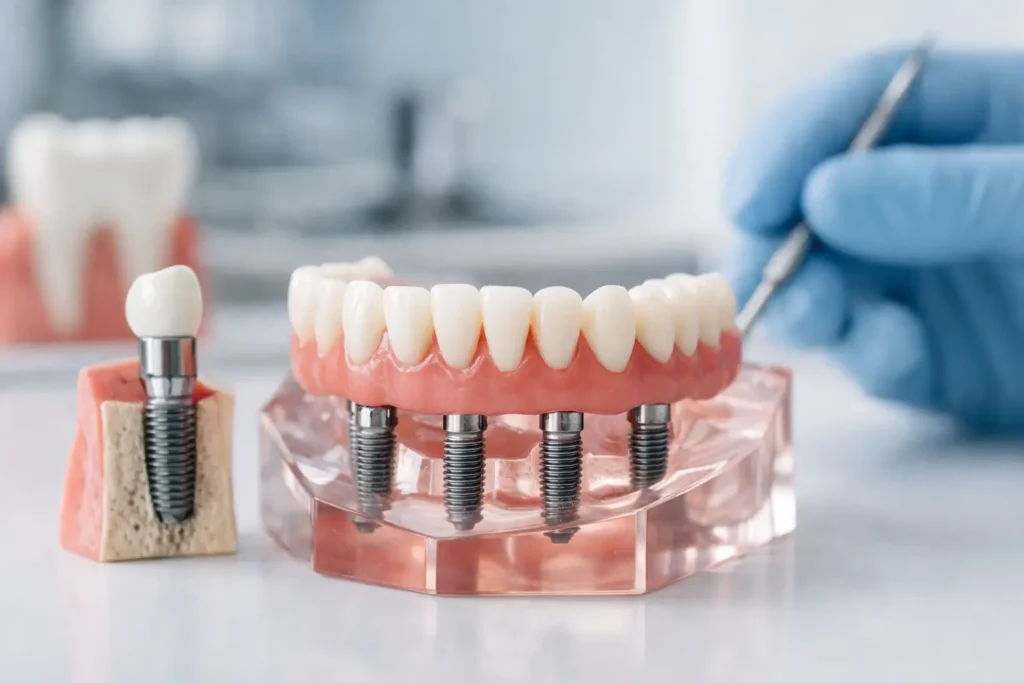
All-on-4 is a full-arch tooth replacement treatment that uses four dental implants to support a fixed bridge for either the upper arch, the lower arch, or both. Instead of placing one implant for every missing tooth, the dentist uses four carefully positioned implants as anchors for a complete row of replacement teeth.
The concept is straightforward. Two implants are usually placed toward the front of the jaw, where bone is often stronger and more stable. Two more are placed toward the back at an angle, which helps maximize available bone and reduce the need for additional procedures in many cases. Once those implants are in place, a full prosthetic arch is attached.
That is what makes the treatment so appealing. Patients who have multiple failing teeth, significant damage, or long-term denture frustration may be able to replace an entire arch with a fixed solution supported by just four implants.
How All-on-4 is different from traditional dentures
Traditional dentures sit on top of the gums and rely on suction, adhesives, and the shape of the mouth for retention. They can work well for some people, but they also come with familiar complaints – slipping, sore spots, difficulty chewing, and a lack of confidence in social situations.
All-on-4 is different because the prosthetic teeth are attached to implants that are placed in the jawbone. That creates a more secure foundation. Patients often describe the difference as moving from a removable appliance to something that feels much closer to natural teeth.
There are trade-offs, though. All-on-4 is a surgical procedure, it requires planning and healing, and it costs more upfront than conventional dentures. But for many patients, the added stability, comfort, and function make that investment worthwhile.
How the procedure works
The process starts with diagnostics, not surgery. A proper evaluation usually includes a clinical exam, digital imaging, and a review of your medical and dental history. The goal is to determine whether your bone volume, gum health, bite, and overall health make you a good candidate.
If damaged or hopeless teeth are still present, those teeth may need to be removed. The implants are then placed in the jaw in strategic positions. In many cases, patients receive a temporary fixed prosthesis soon after surgery, which is why you may hear the phrase “teeth in a day.” That phrase can be accurate, but it should be understood carefully. It usually means you leave with temporary fixed teeth, not the final permanent restoration on day one.
After a healing period, the implants integrate with the bone. Once healing is stable, the final prosthesis is fabricated and attached. This stage matters just as much as the surgery. The fit, bite, esthetics, and materials all influence how comfortable and durable the result will be.
Who is a good candidate?
All-on-4 can be an excellent option for adults who have lost most of their teeth, have multiple teeth that cannot be saved, or are tired of wearing dentures. It is especially appealing for patients who want a fixed full-arch solution without the higher cost and complexity of placing six, eight, or more implants per arch.
That said, not everyone is an ideal candidate right away. Gum disease, uncontrolled diabetes, smoking, heavy grinding, and severe bone loss can complicate treatment. These issues do not always rule it out, but they may change the plan.
Bone quality is one of the biggest variables. One advantage of All-on-4 is that the angled posterior implants can often make use of available bone and reduce the need for grafting. Still, some patients do need extra preparation, particularly in the upper jaw. A careful 3D evaluation is the only way to know.
What are the main benefits?
The biggest benefit is efficiency. All-on-4 allows a full arch to be restored with fewer implants, which can lower treatment time, reduce surgical complexity, and make the total cost more manageable.
Another major advantage is stability. Because the restoration is fixed in place, patients can usually chew better, speak more confidently, and avoid many of the day-to-day frustrations that come with removable dentures.
There is also an esthetic benefit. Full-arch implant restorations are designed to improve smile appearance, support facial structure, and replace worn or damaged teeth with something more natural-looking. When treatment is planned well, the result can be dramatic in a very good way.
For many dental tourism patients, the appeal is also logistical. When a clinic has specialists, digital planning, surgery, prosthetics, and an on-site lab working together, the process can become much more predictable for someone traveling from the US or Canada.
What patients should understand before choosing All-on-4
This treatment is strong, but it is not magic. The prosthetic teeth are not indestructible, and the implants still require healthy tissue and long-term maintenance.
Healing takes time. Even if you receive temporary teeth quickly, you will likely need to follow a soft-food diet for a period while the implants integrate. Patients who ignore those instructions can jeopardize the outcome.
It is also worth knowing that “fixed” does not mean “no maintenance.” You still need professional cleanings, home care, and periodic evaluation. Depending on the prosthetic design, some materials wear differently than others. Acrylic hybrids may be more affordable and easier to repair, while more premium materials can offer added durability and esthetics. The right choice depends on your bite, budget, and treatment goals.
How much does All-on-4 cost?
This is one of the most common reasons patients start researching the procedure in the first place. In the US, full-arch implant treatment can be priced far beyond what many families, retirees, or uninsured patients can comfortably afford. That is why people often compare domestic treatment with high-quality care abroad.
The final cost depends on several factors: whether one arch or both arches are being treated, whether extractions are needed, what type of temporary and final prosthesis is used, and whether additional procedures are required. A patient with healthy bone and a straightforward case will not have the same treatment plan as someone with infection, bone loss, or complex bite issues.
For patients considering Costa Rica, value is not just about a lower number on a quote. It is about receiving specialist-led care, modern diagnostics, efficient turnaround, and support that makes international treatment less stressful. At Colina Dental, that combination of clinical depth and concierge-style coordination is a major reason patients feel comfortable moving forward.
What recovery is really like
Recovery is usually manageable, but it should be taken seriously. Most patients experience swelling, soreness, and some fatigue after surgery. That is normal. The first few days are focused on rest, medication, hydration, and following post-op instructions closely.
The next phase is more about discipline than discomfort. You may feel better quickly, but the implants still need time to integrate with the bone. Soft foods, careful cleaning, and avoiding excessive pressure on the temporary restoration are part of protecting your result.
If you are traveling for treatment, planning matters. You want enough time for appointments, recovery checks, and any adjustment visits before you go home. This is where an organized clinic with experience treating international patients can make a meaningful difference.
What is all on 4 dental implants success based on?
Success depends on more than the implants themselves. Good case selection, precise placement, thoughtful prosthetic design, and close follow-up all matter. So does the experience of the team handling your care.
This is not a treatment where you want guesswork. A prosthodontic perspective, surgical expertise, digital imaging, and strong communication between specialists help reduce surprises and improve long-term function. Patients should also ask practical questions about who is planning the case, what materials are being used, what the timeline looks like, and how aftercare is handled once they return home.
When those pieces come together, All-on-4 can be life-changing. Not because it is trendy, but because it solves real problems for people who want stability, appearance, and confidence without the burden of replacing every tooth with a separate implant.
If you are weighing your options, the best next step is not to guess from photos or pricing alone. Get a clear evaluation, ask direct questions, and choose a team that treats you like a patient first and a traveler second.