



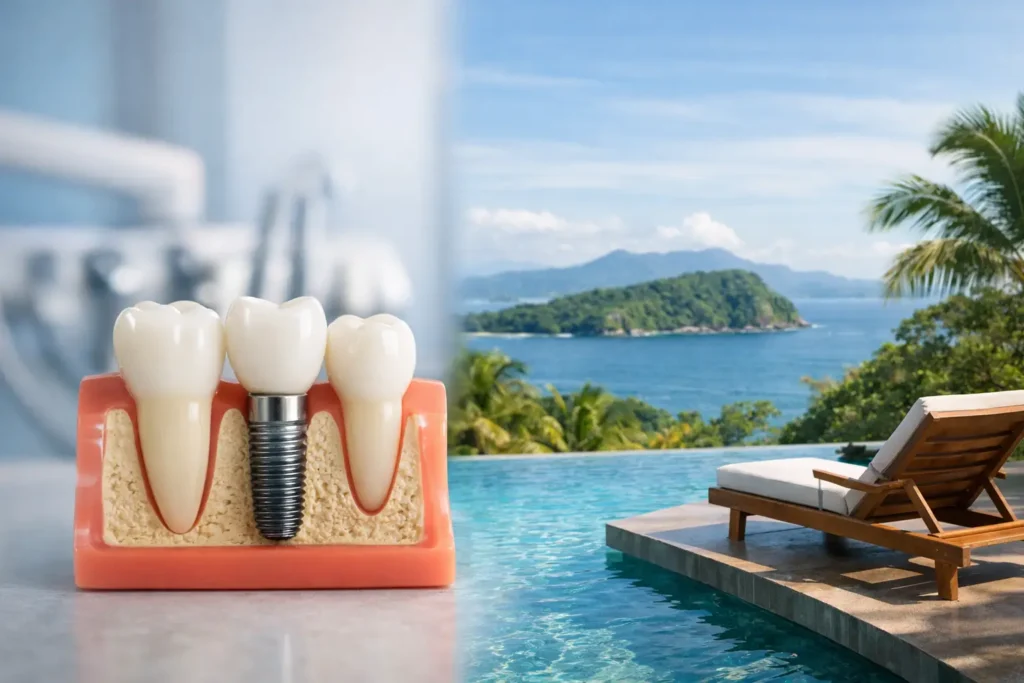
If a single implant quote in the U.S. made you pause, you are not alone. For many patients, the real question is not whether implants are worth it – it is how to get dental implants in Costa Rica without trading quality for savings.
That is the right question to ask. Dental tourism can be an excellent option, but implants are not a one-day cosmetic purchase. They require diagnosis, planning, surgical precision, restorative skill, and follow-up. The clinics that do this well make the process feel organized and safe, not rushed.
How to get dental implants in Costa Rica without guesswork
The process starts long before you board a flight. A reputable clinic will want to review your medical and dental history, recent X-rays if you have them, and clear photos or a CT scan when needed. This first step matters because not every missing tooth is treated the same way. Some patients are ready for an implant right away, while others first need an extraction, bone grafting, gum treatment, or a different full-arch option such as All-on-4.
Once records are reviewed, the next step is a treatment plan. This should be specific, not vague. You want to know how many implants are recommended, whether temporary teeth are included, how long healing may take, what the restoration will be made of, and how many visits are likely required. If a clinic cannot explain the sequence clearly, that is a reason to slow down.
Travel planning comes after clinical planning, not before it. The best experience is usually with a multi-specialty clinic that can manage surgery, restorations, imaging, and adjustments in one place. That reduces handoffs and saves time during a short international stay.
What the implant process usually looks like
For a single implant or a few implants, treatment often happens in phases. During the first visit, the surgeon places the implant into the jawbone. After that, the bone needs time to heal and integrate with the implant. That healing period can take several months, depending on your health, bone quality, and whether grafting was required.
After healing, the final restoration phase begins. An abutment is connected, impressions or digital scans are taken, and the crown, bridge, or denture is made and fitted. Some patients can receive a temporary tooth sooner, but immediate placement and immediate loading are not ideal for every case. Fast treatment sounds appealing, yet long-term stability matters more than speed.
Full-arch cases can move differently. If you have multiple failing teeth, severe tooth loss, or loose dentures, a clinic may recommend implant-supported full-arch treatment. In selected cases, temporary fixed teeth can sometimes be delivered quickly after implant placement. Even then, there is still a healing and transition period before the final prosthesis is completed.
Who is a good candidate for dental implants
Most healthy adults with missing teeth can be considered, but candidacy depends on more than age. Bone density, gum health, smoking status, diabetes control, bite force, and overall oral condition all affect the plan. A patient with one missing tooth and healthy bone is very different from a patient who has worn dentures for years and has experienced bone loss.
This is why proper diagnostics matter so much. A 3D scan helps the clinical team evaluate bone volume, nerve location, sinus position, and implant placement angles. It also helps identify when grafting is necessary and when another treatment path may be more predictable.
If you have been told in the past that you are not a candidate, that may not be the final word. Sometimes the issue is not whether implants are possible, but whether additional preparatory treatment is needed first. On the other hand, if a provider acts as if every patient is automatically a candidate, that is not a reassuring sign either.
What to look for in a Costa Rica implant clinic
Experience should be easy to verify. Look for a clinic with a long history, a visible team of specialists, and a clear implant workflow. For complex cases, specialist-led care matters because implants often involve surgery, prosthodontics, periodontics, and laboratory coordination. When these pieces work together, treatment tends to be more efficient and more precise.
Technology also makes a practical difference. Digital imaging, 3D planning, and an on-site lab can shorten turnaround times and reduce unnecessary delays. If you are traveling from the U.S. or Canada, you want fewer moving parts, not more.
Just as important, the clinic should understand hospitality. Dental tourists are not only choosing a doctor. They are choosing a process in an unfamiliar place. Help with scheduling, airport coordination, lodging guidance, and recovery planning can make the trip far less stressful. That is one reason many patients prefer established providers such as Colina Dental, where specialist care and patient support are built into the same experience.
How long should you stay in Costa Rica?
It depends on your case. A simple consultation and implant surgery may require only a short stay, while a full-arch case or treatment involving extractions, grafting, or temporaries may require more time. Some patients need two separate trips – one for surgery and another after healing for the final restoration.
This is where unrealistic promises can cause trouble. If a clinic implies that every implant case can be completed start to finish in a few days, ask exactly what is being delivered during that visit. Temporary teeth and final teeth are not the same thing. Immediate care can be appropriate, but only when the case supports it.
A good clinic will tell you how many days to plan for, what appointments are likely, and what could change based on healing. That kind of transparency is far more useful than a blanket promise.
Cost savings matter, but so does what is included
One reason patients search for how to get dental implants in Costa Rica is the savings. Compared with typical U.S. pricing, treatment can be significantly more affordable. But price should always be matched against scope.
Ask whether the quote includes consultation, CBCT imaging, extraction if needed, implant placement, abutments, temporary restorations, final crowns or bridges, sedation options, follow-up visits, and lab work. Low headline pricing can look attractive until those pieces are added later.
The strongest value is not the cheapest number. It is a clear treatment plan, reliable specialists, quality materials, and an organized patient experience that reduces complications and repeat travel.
Questions to ask before you book
Before you commit, ask who will place the implants, who will design the final restoration, and whether those providers are specialists. Ask how the clinic handles complications, what follow-up support is available after you return home, and what the timeline looks like if bone grafting is needed.
You should also ask about the materials used, whether the clinic has an on-site lab, and how adjustments are managed if your bite needs refinement during your stay. These are practical questions, not technical extras. They affect comfort, timing, and long-term results.
Most of all, pay attention to how the team communicates. Clear answers, realistic expectations, and a steady process usually signal a clinic that takes both treatment and patient trust seriously.
Travel, recovery, and follow-up
Implant recovery is usually manageable, but it still requires planning. You may have swelling, some tenderness, dietary restrictions, and a temporary change in chewing habits. If you are combining treatment with travel, keep the sightseeing flexible. The better choice is to give yourself room to rest.
Follow-up matters too. A well-run clinic will explain cleaning, healing milestones, medications, and when to check in after you go home. Long-term implant success depends on maintenance as much as placement. Even a perfectly placed implant can fail if gum health and home care are neglected.
For many U.S. and Canadian patients, getting implants in Costa Rica makes financial and practical sense when the clinic is established, the treatment plan is thorough, and the travel experience is well coordinated. The best results come from choosing a team that treats you like more than a case number – because major dental work should feel carefully managed from the first consultation to the final smile.