



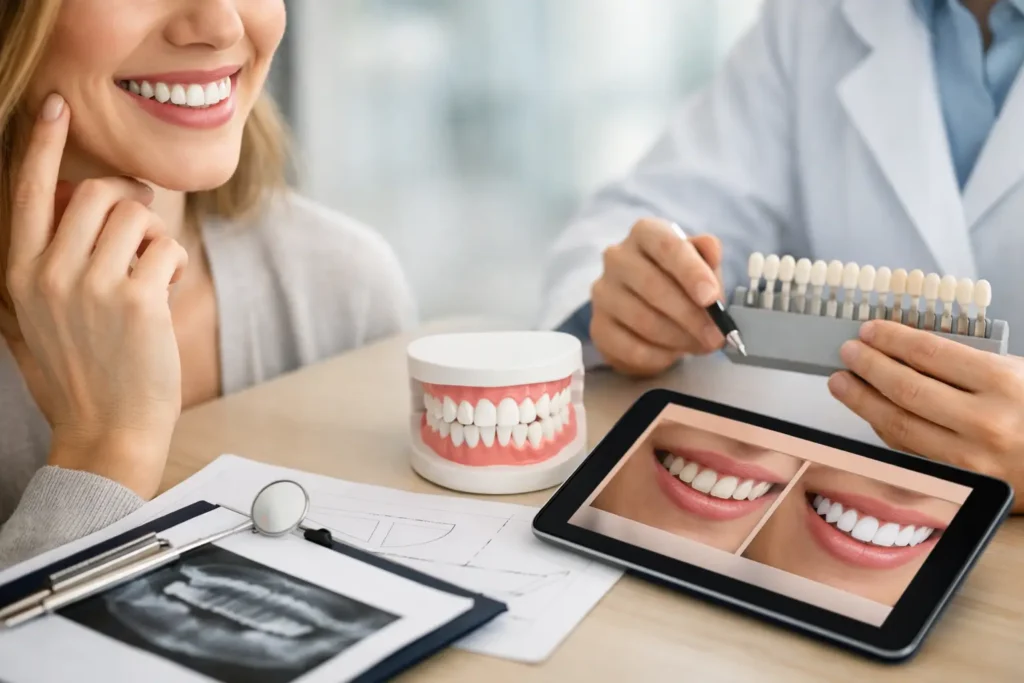
A smile makeover usually starts long before any veneer, crown, or implant is placed. It starts when you look in the mirror and know something feels off – maybe the color, the spacing, old dental work, worn teeth, or a bite that no longer feels right. This guide to smile makeover planning is designed to help you make smart decisions before treatment begins, especially if you are comparing major cosmetic or restorative work and want results that feel worth the investment.
For many patients, the biggest mistake is treating a smile makeover like a single procedure. In reality, it is a treatment plan. The right plan balances appearance, function, health, budget, and timing. If one of those pieces is overlooked, the final result may look good for a short time but fail to hold up where it matters most – comfort, longevity, and confidence.
What a smile makeover really includes
A smile makeover can be simple or complex. For one person, it may mean whitening and a few veneers. For another, it may involve crowns, gum treatment, implants, orthodontics, or full-arch rehabilitation. That is why planning matters so much. The same smile concern can have several treatment paths, and the best option depends on your oral health, the condition of your existing teeth, and your expectations.
Cosmetic goals are only part of the picture. Teeth that are chipped, heavily filled, worn down, missing, or unsupported by healthy gums may need restorative treatment before cosmetic work begins. If you skip that step, you risk investing in a beautiful finish on an unstable foundation.
This is also where a multi-specialty team becomes valuable. If your case touches prosthodontics, periodontics, endodontics, oral surgery, or orthodontics, coordination matters. A well-planned case should not feel pieced together. It should feel like one clear roadmap.
Start your guide to smile makeover planning with the right goals
The best smile makeovers are not built around trends. They are built around you. Some patients want a brighter, more uniform smile for professional confidence. Others want to replace failing dental work, restore the ability to chew comfortably, or correct years of wear. Those are very different goals, and the treatment plan should reflect that.
A good consultation should go beyond asking what shade of white you want. Your dentist should ask what bothers you most, what you want to keep if possible, how much downtime you can manage, and whether durability matters more to you than speed. If you travel for treatment, planning must also account for how many visits are realistic.
Bring photos if they help explain what you like, but stay open to professional guidance. A smile that looks natural on your face depends on tooth shape, lip line, facial proportions, gum display, and bite position. The most attractive result is usually not the most dramatic one.
Oral health comes before cosmetics
This is the part many patients underestimate. If you have gum disease, untreated decay, root canal issues, broken fillings, or bite instability, cosmetic treatment may need to wait. That can feel frustrating, but it protects your long-term result.
For example, veneers may improve shape and color, but they will not fix active periodontal disease. Crowns can strengthen compromised teeth, but not if the underlying tooth structure is failing. Implants can replace missing teeth, but only after proper imaging, bone evaluation, and surgical planning. In more complex cases, what looks like a cosmetic concern from the outside is actually a restorative case first.
A clinic that takes planning seriously will evaluate function as carefully as appearance. That includes your gums, jaw alignment, existing restorations, bone support, and whether your bite places too much stress on certain teeth. It is better to hear that now than after treatment needs to be redone.
Choosing the right procedures for your case
Most smile makeovers involve a mix of options rather than a one-size-fits-all solution. Whitening works well when the issue is primarily stain. Veneers can reshape front teeth and improve symmetry, but they are not ideal for every bite or every patient. Crowns may be better when teeth are heavily restored or structurally weak. Orthodontics can create better spacing and alignment before cosmetic work, which sometimes reduces how much drilling is needed later.
If teeth are missing, implants may be the most stable long-term option, though treatment time can be longer depending on healing needs. Dentures or implant-supported full-arch solutions may make more sense when many teeth are compromised. The right answer depends on how many problems need to be solved at once.
This is where trade-offs matter. Veneers may offer a faster cosmetic change than orthodontics, but moving teeth first may create a more conservative result. Full-mouth crowns can transform worn teeth, but they are a bigger commitment than selective treatment. Faster is not always better, and more treatment is not always better either.
Budgeting without losing sight of quality
Cost is part of smile makeover planning, and it should be discussed clearly. Cosmetic and restorative dentistry can be a major investment, especially in the US and Canada where out-of-pocket costs add up quickly. Patients often start by asking for the cheapest option, but the better question is which treatment gives the best value over time.
A lower upfront fee can become expensive if materials are poor, planning is rushed, or multiple specialists are needed later to correct avoidable problems. On the other hand, a premium treatment plan is not automatically the best one. You want a clinic that explains why a procedure is recommended, what alternatives exist, how long results typically last, and what maintenance will be required.
If you are considering treatment abroad, compare more than pricing. Ask about the experience of the specialists, the technology used for diagnostics and fabrication, whether there is an on-site lab to speed up adjustments, and how follow-up is handled once you return home. For many patients, Costa Rica has become appealing because it can combine substantial savings with high clinical standards and a more organized treatment experience.
Timing, travel, and recovery matter more than people think
A smile makeover is not only a dental decision. It is a scheduling decision. Some treatments can be completed quickly. Others require phased care, healing time, temporary restorations, or multiple appointments over several days or weeks.
This matters even more for dental tourism patients. You need a realistic timeline that includes diagnostics, treatment, possible adjustments, and recovery. If your plan includes surgery, implants, extractions, or full-mouth rehabilitation, building in flexibility is wise. You do not want a flight schedule driving clinical decisions.
Ask how long you should stay after treatment, what level of swelling or sensitivity to expect, and whether you will need a second trip. A clinic experienced in international care should help coordinate these details so the process feels manageable rather than stressful. That support can make a major difference when you are balancing health care with travel logistics.
How to evaluate the dental team
The team you choose will shape both your result and your experience. Smile makeovers often cross specialty lines, so experience and coordination matter. Look for a clinic with a long track record, clear credentials, and the ability to manage complex cases in one place. That reduces delays, conflicting opinions, and unnecessary referrals.
Technology also matters, but it should support clinical judgment, not replace it. Digital imaging, 3D planning, and modern lab workflows can improve precision and efficiency. An on-site lab can be especially helpful when timing is tight and same-trip refinements are needed.
Just as important is how the clinic communicates. You should feel informed, not rushed. A strong team will explain options in plain language, show you what is urgent versus elective, and make sure you understand the scope of treatment before you commit. At Colina Dental, that combination of specialist-led planning, modern dentistry, and hospitality-focused coordination is exactly what many traveling patients are looking for.
Questions worth asking before you say yes
Before approving a smile makeover plan, ask what problem each procedure is solving. Ask whether any health issues need to be addressed first, what the alternatives are, how long treatment will take, and what maintenance your new smile will require. Also ask what happens if a temporary restoration breaks, a tooth does not respond as expected, or your bite needs adjustment after placement.
These are not negative questions. They are practical ones. Good planning is not about promising perfection. It is about reducing surprises and giving you confidence that your care is being handled responsibly.
A smile makeover can change more than your appearance. It can make eating easier, speaking more comfortable, photos less stressful, and everyday interactions feel lighter. The best results come from planning that respects both the art and the science of dentistry. Take your time, ask better questions, and choose a team that treats your case like a long-term investment in your health, not just a cosmetic upgrade.