



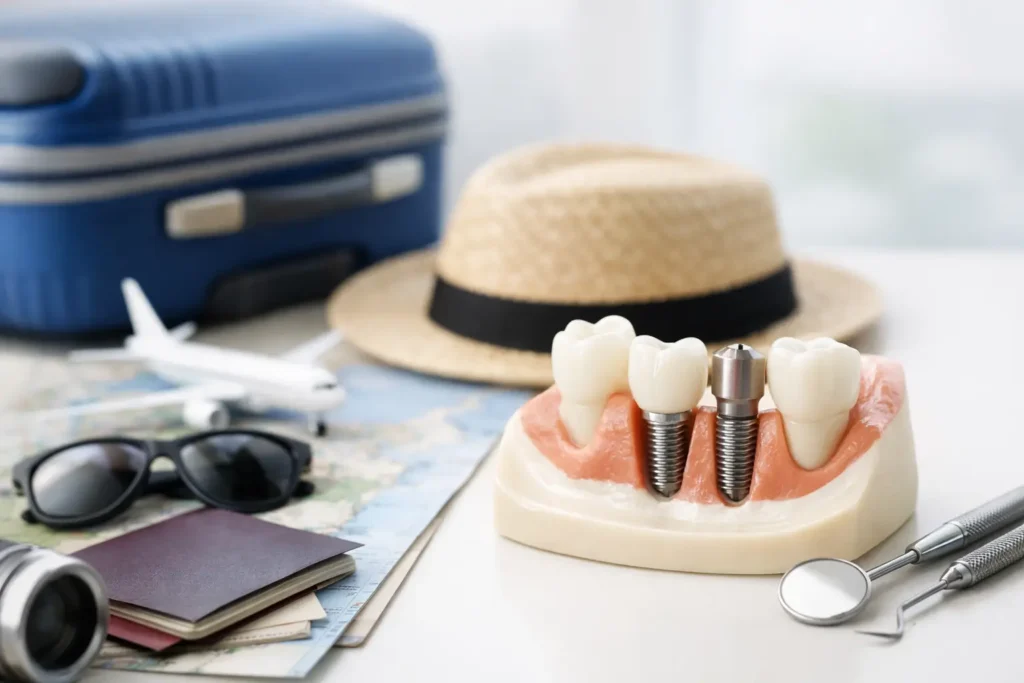
If you’re planning implant treatment from the US or Canada, the real question usually is not just cost. It’s time away from work, how long you’ll need to stay, and whether you’ll need to come back more than once. That is why patients often ask how many trips for dental implants are actually necessary.
The honest answer is: it depends on the type of implant treatment, your bone and gum health, and whether extra procedures are needed first. Some patients can complete treatment in one visit and return later only if they want a final check. Others need two planned trips. More complex cases may require a longer timeline.
For most people, the number of trips falls into a predictable range once a specialist reviews scans and health history. That predictability matters, especially when you’re arranging flights, lodging, and recovery time.
How many trips for dental implants is normal?
For a straightforward single implant, two trips are common. The first trip is usually for diagnostics, implant placement, and any immediate temporary restoration if appropriate. Then there is a healing period, often a few months, before the second trip for the final crown.
For full-arch treatment such as All-on-4, many patients can complete the surgical phase and receive a fixed temporary bridge during one trip, then return later for the final restoration after healing. In those cases, two trips are also common.
There are exceptions. If you already have healed implant sites, enough bone, and no infection or grafting needs, the process may be more efficient. On the other hand, if you need extractions, bone grafting, sinus lift surgery, or treatment for gum disease first, you may need an additional visit or a longer first stay.
What happens on the first trip?
The first trip is where the plan becomes real. This visit typically includes a clinical exam, 3D imaging, treatment confirmation, and the surgical phase. If the treatment plan was reviewed in advance, your time in the chair can be organized very efficiently.
For a single implant, the implant post may be placed during this trip. If the site is ideal and bite pressure can be controlled, some patients may also receive a temporary tooth. If the site is not ready for immediate loading, the implant is placed and left to heal.
For multiple implants or full-mouth reconstruction, the first trip may also include extractions, implant placement, and a temporary fixed bridge or denture. This is one reason patients look for a clinic with specialists, digital planning, and an on-site lab. Better coordination often means fewer delays and a smoother stay.
Length of stay matters too. A patient having one implant may only need a shorter visit, while someone receiving full-arch treatment should expect more recovery time and follow-up checks before flying home.
Why a second trip is often needed
Dental implants need time to integrate with bone. That healing process, called osseointegration, cannot be rushed beyond what your biology allows. Even when surgery goes well and the implant feels stable, the final restoration is often better placed after the bone has healed properly.
That is why a second trip is so common. During that visit, the team checks integration, takes impressions or digital scans, and places the final crown, bridge, or full-arch prosthesis. The final restoration is designed for long-term fit, bite balance, and appearance.
For patients traveling internationally, this staged approach is usually the safest and most predictable. It reduces the risk of putting too much pressure on a newly placed implant and gives the team time to fine-tune the esthetics and function.
Can dental implants be done in one trip?
Yes, in some cases, but one trip does not always mean the entire implant process is permanently finished.
A patient may have implants placed and leave with a temporary tooth or temporary fixed bridge during one visit. This is common in immediate-load cases and can be a very attractive option for travelers who do not want to be without teeth. But the final restoration may still require a second trip after healing.
There are also cases where everything can truly be completed in one extended stay, especially if implants are already healed or if the final prosthetic phase is the only step remaining. The key point is that “same trip” and “fully completed forever” are not always the same thing.
A trustworthy implant team will tell you clearly whether your one-trip option includes a temporary solution, a final solution, or a phased plan.
Cases that may require more than two trips
Two trips are common, but not guaranteed. Some situations naturally add time.
If you need bone grafting before implants, the graft may need to heal before the implant can be placed. If a tooth has active infection or severe bone loss, your surgeon may recommend a staged approach for better long-term stability. Patients with uncontrolled grinding, smoking-related healing risks, or more advanced periodontal problems may also need a more cautious timeline.
Very complex cosmetic-restorative cases can add prosthetic visits too. If the goal is not only function but also a major smile redesign, the team may take extra steps to refine the final shape, bite, and esthetics.
This is not bad news. It is careful treatment planning. The right number of trips is the number that gives you a durable result, not just a fast one.
How many trips for dental implants if you need All-on-4?
For All-on-4 or full-arch implant rehabilitation, two trips are often the standard plan. On the first trip, patients may have any remaining failing teeth removed, implants placed, and a fixed temporary bridge delivered. After a healing period, they return for the final bridge.
The first trip is usually longer than it would be for a single implant because there is more surgical work, more recovery, and more prosthetic coordination. The second trip may be shorter, depending on how the final bridge is fabricated and fitted.
This is where experience matters. Full-arch cases involve surgery, bite design, esthetics, and lab precision all working together. When those pieces are coordinated under one roof, travel treatment becomes much more manageable for patients coming from abroad.
What affects the number of trips most?
Three factors tend to matter most: your starting condition, the type of restoration, and how much can be planned before you travel.
Your starting condition includes bone volume, gum health, infection, and whether teeth need to be removed. The type of restoration matters because a single implant crown is different from a full-arch bridge. And pre-travel planning matters because when records, photos, and health details are reviewed ahead of time, fewer surprises happen after arrival.
Technology can also shorten the process. 3D imaging, digital treatment planning, and an on-site lab can reduce waiting time between steps. That does not remove the need for healing, but it can make each trip more efficient.
Planning your stay if you’re traveling for implants
If you’re trying to compare clinics, ask a very direct question: “How many trips for dental implants in my specific case, and how long should I stay each time?” A clear answer should include the expected procedures on each trip, healing time between visits, and whether your provisional teeth are included.
You should also ask what could change the plan. For example, if the surgeon finds less usable bone than expected, would that add grafting or extend the stay? If a temporary bridge is placed, when is the final one expected? These are practical questions, not technical ones, and a good clinic should answer them clearly.
For international patients, support beyond the operatory also matters. Travel coordination, nearby lodging, and organized scheduling can make a multi-visit treatment plan feel far less stressful. That is especially true when you’re recovering away from home.
At Colina Dental, many patients choose treatment in Costa Rica because they want specialist-led implant care, a clear timeline, and help coordinating the travel side of the experience along with the dentistry.
The best answer is a personalized one
If you’ve been searching for a simple number, here it is: many implant patients need two trips, some need one, and complex cases may need more. The right timeline depends on healing, bone support, and whether your treatment includes temporary or final teeth.
The good news is that implant treatment is usually more predictable than patients expect once proper diagnostics are done. A well-planned case should give you a realistic schedule before you book anything, so you can make decisions with confidence instead of guesswork.
The smartest next step is not to chase the shortest timeline. It’s to get a treatment plan that respects your health, your travel schedule, and the quality of the final result.