



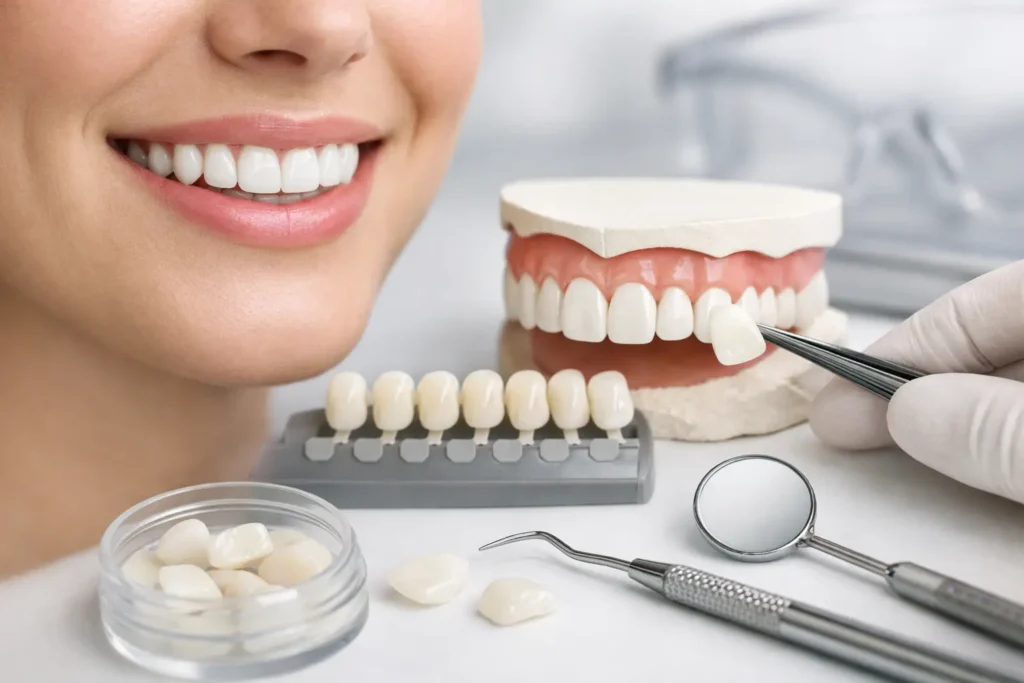
A great veneer case does not start when the porcelain is bonded. It starts much earlier – with honest planning, healthy teeth and gums, and a clear understanding of what can and cannot be changed. If you are looking for a guide to porcelain veneer treatment process, the most useful thing to know is this: veneers are not a one-day cosmetic shortcut. They are a precise, custom treatment that works best when the diagnosis, design, and preparation are handled carefully.
For many patients from the US and Canada, veneers are part of a bigger decision about value, quality, and timing. They want a brighter, more balanced smile, but they also want predictable results and a clinic that can coordinate the experience well. That matters because veneer treatment is both cosmetic and technical. The final look depends on artistry, but longevity depends on clinical discipline.
What porcelain veneers actually do
Porcelain veneers are thin ceramic shells placed over the front surface of teeth to improve color, shape, proportion, and sometimes minor alignment issues. They are commonly used to correct worn edges, chips, stubborn discoloration, uneven spacing, and teeth that look too short or irregular.
What veneers do very well is create a controlled, polished improvement in visible smile areas. What they do not do is fix every problem. If a patient has active gum disease, untreated decay, bite instability, or significant crowding, those issues usually need to be addressed first. In some cases, whitening, bonding, orthodontics, or crowns may be a better fit than veneers on their own.
That is why a careful evaluation matters more than the marketing around a “smile makeover.” Good treatment planning protects both appearance and long-term function.
Guide to porcelain veneer treatment process: step by step
1. Consultation and smile evaluation
The first stage is a full assessment of your oral health, facial proportions, smile line, tooth display, bite, and goals. Photos, digital scans, and X-rays are often part of this step. If you are traveling for treatment, this planning may begin remotely with records and photos before you arrive, then be confirmed in person.
This is where your dentist determines whether veneers are the right treatment and how many teeth should be included. Some patients only need four or six veneers in the visible zone. Others need eight or ten for a more even smile. The number is not about selling more dentistry. It is about matching color, symmetry, and how wide your smile appears when you talk and laugh.
A strong consultation should also cover trade-offs. If you want very bright veneers, your natural teeth may need whitening first so the overall smile blends better. If you grind your teeth, you may still be a candidate, but protective planning and a night guard become more important.
2. Treatment design and shade planning
Once candidacy is confirmed, the veneer design phase begins. This includes selecting shape, length, contour, and shade. The best cosmetic results are usually not the brightest possible white. They are the most natural-looking version of your ideal smile, chosen to fit your skin tone, facial features, and age.
This step often benefits from digital smile design, mock-ups, or wax-up planning. These tools help preview changes before final veneers are made. Patients who travel for care often appreciate this stage because it reduces guesswork. You are not simply hoping the final result will suit you. You are reviewing a plan.
An on-site lab can make this process more efficient because communication between the dentist and lab team happens faster. That can be especially helpful when treatment is being completed within a travel window.
3. Tooth preparation
Porcelain veneers usually require a conservative amount of enamel reduction so the veneers sit naturally and do not look bulky. The amount removed depends on the case. Some veneers are very minimal-prep, while others need more shaping to create proper alignment, translucency, and strength.
This part of the process makes some patients nervous, which is understandable. The key is that preparation should be precise and as conservative as the case allows. Veneers are not about aggressively cutting healthy teeth for a cosmetic trend. They are about making controlled changes that support a durable, aesthetic result.
If the teeth are already heavily restored, worn, or structurally compromised, crowns may be more appropriate than veneers. That is another reason why a specialist-led evaluation matters.
4. Impressions or digital scans
After preparation, detailed impressions or digital scans are taken. These records are used to fabricate the custom porcelain veneers. Accuracy here is critical. Small errors in fit can affect comfort, edge adaptation, gum response, and appearance.
Modern digital dentistry improves precision and helps the team evaluate how each veneer will seat and contact neighboring teeth. For patients on a tighter travel schedule, digital workflows can also help speed communication with the lab while maintaining quality control.
5. Temporary veneers
In many cases, temporary veneers are placed while the final restorations are being fabricated. These temporaries protect the prepared teeth and give you a preview of shape and length. They are not the final result, but they can reveal useful feedback.
For example, you may realize a central tooth edge feels slightly too long, or that you want a softer shape. Those details can often be adjusted before the definitive veneers are delivered. This is one of the most valuable parts of the treatment process because it allows refinement before the final bond.
6. Lab fabrication
The final porcelain veneers are crafted based on the treatment plan, scans, and esthetic goals discussed with your dentist. High-quality ceramics are chosen for strength, translucency, and natural surface texture. This is where experience matters enormously. A veneer should not look flat, opaque, or overly uniform.
Beautiful porcelain reflects light in a way that resembles natural enamel. It should enhance your smile without making every tooth look identical or artificial. Patients often focus on color, but contour and texture are just as important to a natural result.
7. Try-in and approval
Before final bonding, the veneers are typically tried in so the dentist can evaluate fit, margins, bite, shape, and appearance. This is your chance to see the proposed result and raise any concerns.
A good team will not rush this step. If something needs adjustment, it is better to address it now than after final cementation. Cosmetic dentistry should feel collaborative, especially when a patient has traveled for treatment and wants confidence before heading home.
8. Final bonding
Once approved, the veneers are bonded to the teeth using adhesive protocols designed for long-term retention and strength. The teeth are cleaned and prepared, the inner surface of the veneer is treated appropriately, and the bonding material is placed carefully.
This step requires isolation, precision, and attention to detail. After bonding, the dentist checks bite contacts and makes small finishing adjustments. When done correctly, the result should feel smooth, balanced, and natural in function as well as appearance.
How long the porcelain veneer treatment process takes
A common question in any guide to porcelain veneer treatment process is timing. The answer depends on how many veneers you need, whether any pre-treatment is required, and how the clinic organizes digital planning and lab work.
For straightforward cosmetic cases, treatment may be completed in a few visits over several days. If whitening, gum contouring, bite correction, or other restorative work is needed first, the process can take longer. Patients traveling internationally should always build in enough time for evaluation, preparation, try-in, and final delivery without feeling rushed.
This is where an experienced dental tourism clinic can make a difference. Coordinated scheduling, in-house technology, and lodging support can turn a complex timeline into a manageable stay.
What affects cost and value
Porcelain veneers are an investment, and price varies based on the number of veneers, material selection, complexity, and the expertise of the treating team. The cheapest option is rarely the safest option, especially in cosmetic dentistry. Poorly planned veneers can lead to bite issues, gum irritation, replacement costs, or a smile that simply does not look right.
Real value comes from diagnostic quality, specialist oversight, high-grade materials, and predictable execution. For US and Canadian patients considering treatment abroad, the appeal is often substantial savings compared with domestic pricing, without giving up modern technology or specialist-led care. At established clinics such as Colina Dental, that value is strengthened by integrated planning, an on-site lab, and support that extends beyond the dental chair.
Recovery, maintenance, and realistic expectations
Most patients return to normal activities quickly after veneer placement. You may notice mild sensitivity at first, and it can take a short period to adjust to the feel of the new surfaces. The goal is not just a prettier smile in photos. The goal is a smile that feels comfortable when you speak, eat, and live your daily life.
Veneers still require maintenance. You should brush and floss consistently, attend regular checkups, avoid using your teeth as tools, and wear a night guard if you clench or grind. Porcelain resists staining better than natural enamel, but the surrounding teeth can still darken over time, which is another reason planning the overall smile carefully matters.
A well-done veneer case can last many years, but longevity depends on habits, bite forces, oral hygiene, and the quality of the original treatment. That is why the best veneer patients are not looking for a quick cosmetic fix. They are looking for a durable improvement delivered with skill and care.
If you are considering veneers, the smartest next step is not chasing the whitest smile or the lowest quote. It is choosing a team that evaluates your health first, designs conservatively, and treats your time, comfort, and trust with the same care as your teeth.