



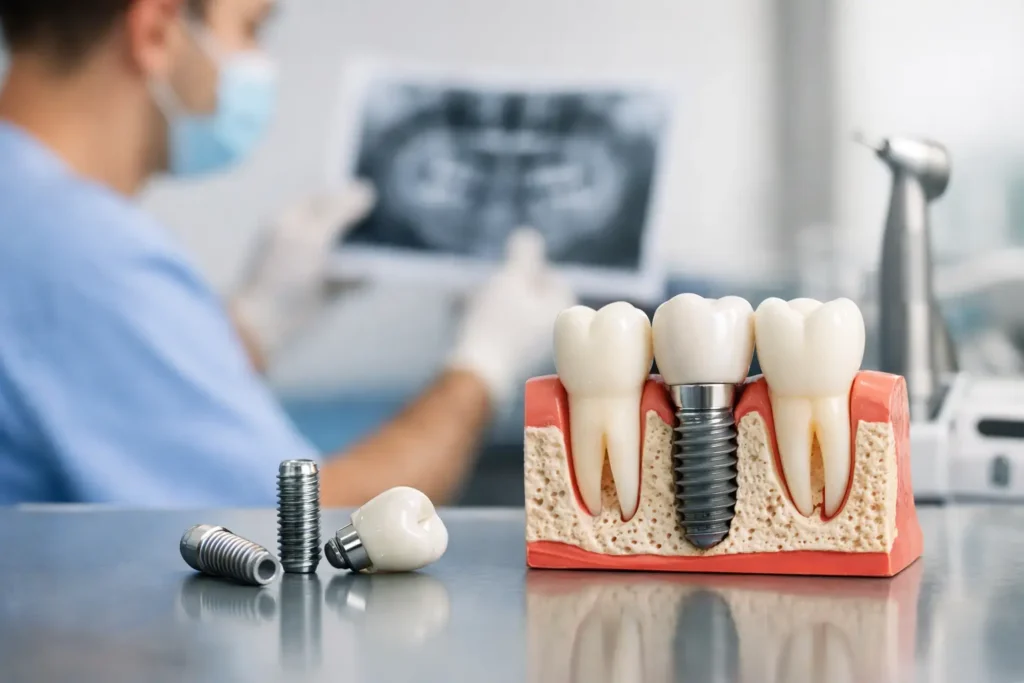
A missing tooth used to mean a long, uncomfortable process with more guesswork than most patients realized. Today, implant dentistry innovations are changing that experience in ways patients can actually feel – from more precise planning to faster restorations and better long-term function.
For adults comparing treatment options, especially those considering major restorative work, that shift matters. The best advances are not flashy add-ons. They reduce surprises, improve fit, help specialists work more efficiently, and make complex care more predictable. If you are investing in one implant or a full-arch solution, the real question is not what is new. It is what genuinely improves outcomes.
Which implant dentistry innovations actually make a difference?
Some technologies sound impressive in marketing but offer limited benefit in the chair. Others quietly improve nearly every stage of care. The most valuable innovations tend to do three things well: they improve diagnosis, support more accurate treatment, and shorten the path from surgery to final teeth without sacrificing quality.
That is especially important for patients traveling for treatment. When your care plan involves time away from home, the process needs to be coordinated, efficient, and based on clear clinical data. Innovations that help a specialist plan more precisely are often more valuable than those that simply sound modern.
3D imaging changed implant planning
One of the most important advances in implant care is 3D cone beam imaging. Traditional 2D X-rays still have value, but they cannot show the full shape, density, and position of the jawbone in the same way. With 3D scans, specialists can evaluate bone volume, identify anatomical structures like nerves and sinuses, and place implants with a much higher level of confidence.
For patients, this means fewer assumptions and a more individualized treatment plan. If bone grafting is needed, it can be identified early. If immediate implant placement is possible, that can be mapped out in advance. The planning becomes more transparent, and the treatment timeline is easier to understand.
This does not mean every case becomes simple. Some patients still present with advanced bone loss, infection, or years of missing teeth that complicate treatment. But 3D imaging gives the clinical team a far clearer starting point, which is exactly what you want before any surgical procedure.
Digital treatment planning improves precision
Modern implant placement is increasingly driven by digital planning software. Instead of relying only on visual estimation during surgery, specialists can plan implant position virtually before treatment begins. They can account for bone quality, the angle of the implant, and the way the final crown or bridge should sit in relation to the bite.
This is one of the most practical implant dentistry innovations because it connects surgery to the final result. An implant is not successful simply because it integrates with bone. It also has to support a restoration that looks natural, feels stable, and functions properly when you chew and speak.
When planning is done digitally, the restorative and surgical sides of treatment can be coordinated more effectively. That matters even more in full-mouth rehabilitation, where small discrepancies can affect comfort, esthetics, and long-term wear.
Guided surgery can reduce guesswork
In many cases, digital planning leads to guided implant surgery. A custom surgical guide helps the doctor place implants in the precise location, depth, and angle determined during planning. This can improve accuracy and help protect important anatomical structures.
For the right patient, guided surgery may also make the procedure less invasive. Smaller incisions can sometimes be used, which may reduce post-operative discomfort and support healing. That said, guided surgery is not automatically necessary in every case. Experienced surgeons may choose a conventional approach when anatomy, access, or case complexity calls for flexibility during the procedure.
The key point is not that one method is always better. It is that modern tools give specialists more control and allow them to choose the safest, most efficient path for the specific case in front of them.
Better materials are improving esthetics and durability
Implants themselves are still most commonly made from titanium for good reason. Titanium remains highly reliable and well-studied. But innovation in restorative materials has expanded what is possible above the implant, especially for visible areas of the mouth.
High-strength ceramics and improved zirconia restorations now offer excellent esthetics with impressive durability. Digital milling also helps create restorations with more consistent fit. For a patient replacing front teeth or restoring a full arch, that combination of strength and appearance can make a significant difference.
There are trade-offs, of course. The best material depends on location in the mouth, bite force, cosmetic goals, and budget. A molar under heavy pressure may call for a different approach than a front tooth where translucency and color matching matter most. Good care is never one-size-fits-all, even with better materials available.
On-site labs and faster turnaround are changing the patient experience
One of the least talked-about innovations is not a machine at all. It is workflow integration. When a clinic combines digital scanning, implant planning, and an on-site dental lab, treatment can move faster and with fewer handoff errors.
That can be a major advantage for patients traveling internationally. Adjustments, temporaries, and final restorations can often be handled more efficiently when the clinical and lab teams work closely together. Instead of waiting on outside production and shipping delays, the process becomes more coordinated.
For complex cases like All-on-4 or full-arch reconstruction, that efficiency is more than a convenience. It can mean fewer appointments, better communication between specialists and technicians, and a smoother overall experience. At a multi-specialty clinic such as Colina Dental, this kind of coordination supports both quality and patient comfort.
Immediate load protocols are helping the right patients leave with teeth sooner
Many patients ask whether they can receive implants and temporary teeth in a shorter time frame. In selected cases, yes. Immediate load protocols allow temporary restorations to be placed soon after surgery, particularly in full-arch cases where implant stability is strong and treatment has been carefully planned.
This is one of the most exciting developments for dental travelers because it can dramatically improve quality of life during treatment. Patients may avoid spending months with removable dentures or visible gaps while healing progresses.
Still, immediate load is not appropriate for everyone. Bone quality, overall health, bite forces, and habits like smoking all affect candidacy. A responsible clinic will not promise speed at the expense of stability. The right answer depends on whether immediate function can be delivered safely.
Smarter diagnostics are supporting long-term success
Innovation should not stop once the implant is placed. Long-term success depends on maintenance, bite control, gum health, and follow-up monitoring. Digital records, intraoral scanning, and more precise restorative checks can help detect issues before they become major problems.
This matters because implant failure is rarely about one single event. More often, complications develop gradually through overload, poor hygiene, gum inflammation, or a restoration that no longer fits the bite correctly. Better monitoring helps protect the investment you made in treatment.
Patients sometimes assume newer technology eliminates risk. It does not. What it does is reduce avoidable errors and make it easier for skilled specialists to deliver more predictable care. Experience still matters. So does a clear treatment plan and honest case selection.
What patients should look for beyond the technology
The strongest implant cases are built on more than equipment. You want a team that can explain why a certain approach fits your mouth, your timeline, and your budget. You also want specialists who can handle related needs under one roof, whether that means extractions, periodontal treatment, bone grafting, root canal therapy, or final prosthetics.
For many US and Canadian patients, the appeal of dental tourism starts with cost savings. That is understandable. But the better question is value. If a clinic combines specialist-led care, modern digital systems, strong restorative planning, and logistical support for travel and recovery, the experience becomes more predictable from start to finish.
That is where innovation becomes meaningful. Not as a sales term, but as part of a system designed to make major dental care safer, more comfortable, and more efficient for real people.
If you are considering implants, ask not only what technology a clinic has, but how that technology improves planning, accuracy, turnaround, and long-term support. The right advances should help you feel more confident before treatment begins – and more comfortable with the result long after you return home.