



Loose dentures change more than your bite. They change what you order at dinner, how often you smile in photos, and how much confidence you feel in everyday conversations. This guide to implant supported dentures is written for patients who want a more secure, longer-lasting option and need clear answers before making a major treatment decision.
What implant supported dentures actually are
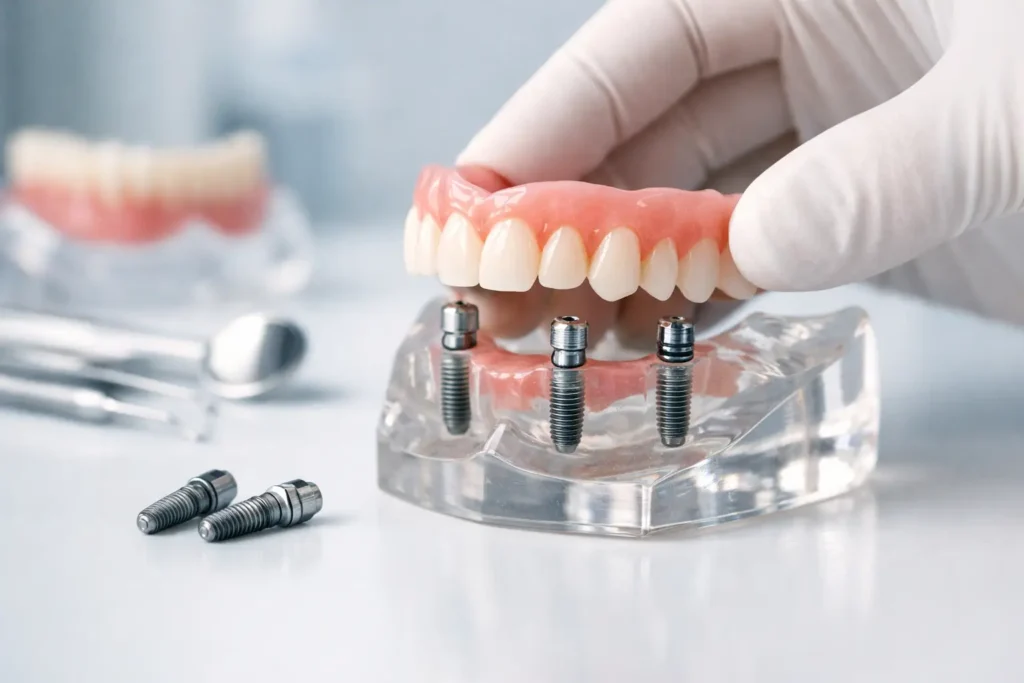
Implant supported dentures are replacement teeth that attach to dental implants placed in the jawbone. Unlike traditional dentures that sit on the gums and rely on suction, adhesive, or muscle control, these dentures are stabilized by implants. That added support can make a dramatic difference in comfort, chewing strength, and confidence.
There are two main categories. One is a removable overdenture that snaps onto implants and can be taken out for cleaning. The other is a fixed full-arch prosthesis that is secured in place by the dentist and is not removed at home. Both options are far more stable than conventional dentures, but the right choice depends on your bone levels, budget, oral health, and treatment goals.
For many patients, the appeal is simple. Implant support helps reduce slipping, improves function, and often creates a more natural feel. It can also help preserve the jawbone better than a tissue-supported denture alone.
A guide to implant supported dentures for deciding if they are right for you
If you are missing most or all of your teeth, or you are frustrated with a lower denture that moves too much, implant supported dentures may be worth serious consideration. They are often a strong fit for patients who want better stability but are not sure whether they need individual implants for every missing tooth.
That said, not everyone starts from the same place. Some patients have worn dentures for years and have already lost bone volume. Others still need extractions, gum treatment, or bone grafting before implants can be placed safely. Smoking, uncontrolled diabetes, active periodontal disease, and certain medications can also affect healing and candidacy.
This is why a proper evaluation matters. A treatment plan should not be based on guesswork or a quick visual exam. Digital imaging, bite analysis, medical history, and prosthetic planning all matter. In complex full-mouth cases, specialist-led treatment planning is especially important because the denture design and implant placement must work together from the beginning.
The biggest benefits patients notice
The first thing most patients notice is stability. A denture that no longer shifts during meals or speech can feel like a major quality-of-life upgrade. Chewing tends to improve, especially with foods that are difficult to manage in a traditional lower denture.
Many patients also appreciate the psychological benefit. When your teeth feel secure, you stop thinking about them every few minutes. That can make social situations easier and reduce the daily annoyance of adhesives, pressure spots, and embarrassing movement.
There is also a health angle. Because implants stimulate the jawbone, they can help slow the bone loss that often follows tooth loss. They do not stop aging or eliminate all future changes, but they generally provide better long-term support than dentures resting on gum tissue alone.
Removable vs fixed: what is the difference?
A removable implant overdenture usually connects to two, four, or sometimes more implants, depending on the arch and case complexity. It clicks into place and can be removed at home. This option is often more budget-friendly than a fixed restoration, and many patients find it much more secure than a conventional denture.
A fixed implant supported denture, often used in full-arch solutions such as All-on-4, is attached more permanently. It is designed to stay in place and is removed by the dental team during maintenance visits when needed. Patients often prefer this option because it feels closer to having natural teeth, but it usually involves a higher investment and stricter planning.
Neither choice is universally better. Removable overdentures can be easier to clean and more affordable. Fixed restorations can feel more natural and offer stronger function. The best answer depends on anatomy, expectations, and how much maintenance you are comfortable handling at home.
What the procedure usually involves
Treatment typically starts with a consultation, imaging, and a full restorative plan. If teeth need to be removed or infection needs to be treated first, that happens before or during the implant phase. In some cases, implants can be placed and a temporary prosthesis delivered quickly. In others, a healing period is needed before the final denture is made.
After implants are placed, the bone needs time to integrate with them. This healing process is called osseointegration. The timeline varies. Some patients qualify for immediate loading, while others need several months before the denture is attached. Faster is not always better. The safest schedule is the one that matches your bone quality and surgical situation.
Once healing is complete, impressions or digital scans are used to fabricate the final prosthesis. Fit, bite, appearance, and speech are checked carefully. When a clinic has advanced digital technology and an on-site lab, this stage can often move more efficiently, which matters for patients traveling for care.
Recovery and adjustment
Most patients describe implant placement recovery as manageable, especially when compared with the frustration of years in loose dentures. Some swelling, tenderness, and diet modifications are normal in the early phase. If extractions or grafting are involved, recovery can be more involved.
The prosthetic adjustment period matters too. Even when the denture is secure, your cheeks, tongue, and bite need time to adapt. Speech may feel slightly different at first. Certain foods may still need to be reintroduced gradually. The goal is not just to place implants, but to create a prosthesis you can live with comfortably every day.
Good follow-up care is part of the treatment, not an extra. Adjustments, bite checks, and hygiene guidance help protect your investment and improve long-term comfort.
Cost, value, and why treatment plans vary
One reason patients research this treatment so carefully is cost. Implant supported dentures are a significant investment, but they can still be much more economical than replacing each missing tooth individually. The total cost depends on how many implants are needed, whether the denture is removable or fixed, the materials used, and whether you need preparatory care such as extractions or bone grafting.
This is also why broad online price comparisons can be misleading. Two patients may both say they need implants and dentures, but one may have healthy bone and need a straightforward overdenture, while the other needs surgery, a temporary prosthesis, and a full fixed arch restoration. Those are not the same case.
For patients from the US and Canada, dental tourism often becomes part of the conversation because the savings can be substantial without giving up quality – provided the clinic has the right credentials, specialists, technology, and continuity of care. At Colina Dental, treatment planning is built around exactly that balance: specialist-led dentistry, transparent coordination, and practical support for patients traveling for advanced restorative care.
Questions to ask before saying yes
Before moving forward, ask how many implants are recommended and why. Ask whether the denture will be removable or fixed, what maintenance it requires, how long treatment will take, and what temporary solutions are available during healing.
You should also ask who is planning the case. Full-arch restorative work is not just surgery and not just cosmetics. It is a coordinated treatment that benefits from input across implant placement, prosthetics, bite design, and long-term maintenance.
Finally, ask about what happens after you go home. Patients traveling for care need a clear plan for follow-up, records, and communication. The smoother that process is, the more confident you can feel before treatment even begins.
Long-term care matters more than most patients expect
Implant supported dentures are durable, but they are not maintenance-free. The implants still need healthy surrounding tissue. The prosthesis still needs cleaning. Attachments, screws, and acrylic or ceramic components may need periodic servicing over time.
That does not mean the treatment is fragile. It means it is real dentistry, and real dentistry needs maintenance. Patients who do well long term are usually the ones who understand this early and commit to daily hygiene and regular professional checks.
If you are tired of loose dentures and want a solution that feels more secure, more predictable, and more comfortable, implant supported dentures are worth a careful look. The best next step is not choosing a product – it is getting a proper evaluation from a team that can match the treatment to your health, your goals, and the life you want to get back to.