



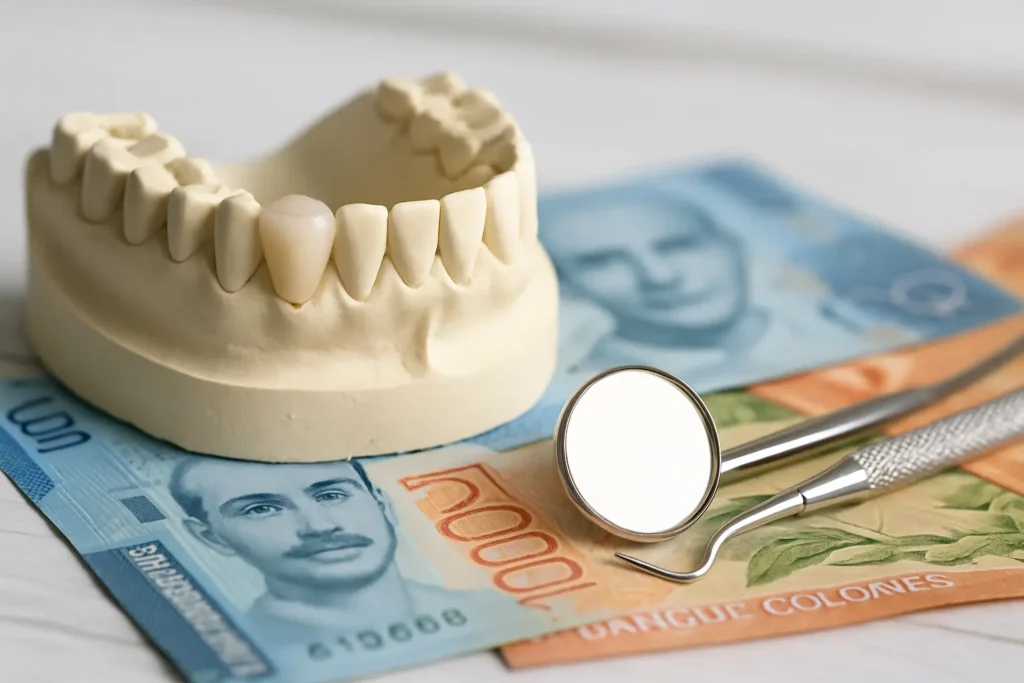
You can usually tell when you need a crown because chewing starts to feel like a negotiation. A tooth that used to be “fine” suddenly protests cold water, cracks when you bite something normal, or looks like it’s missing a corner. Then you call a US office, hear a number that makes you pause, and start wondering whether dental travel actually pencils out.
If you’re researching dental crowns in Costa Rica cost, you’re already thinking like a smart patient: you want a predictable total, not a low headline price that turns into a surprise bill once the dentist finds decay, old filling failure, or a tooth that needs a root canal first. Let’s walk through what crown pricing typically looks like in Costa Rica, what really changes the final cost, and how to plan a trip that feels controlled rather than stressful.
Dental crowns in Costa Rica cost: the real range
Most US patients explore Costa Rica because they’re used to paying a premium for crowns at home, especially when insurance coverage is limited, maxed out for the year, or comes with exclusions. In Costa Rica, crown fees are typically lower while still allowing patients to choose modern materials and work with experienced specialists.
Your real-world total generally depends on two big things: the crown material (what the crown is made of) and the amount of “foundation” work the tooth needs before a crown can even be placed.
A single crown may be priced as a straightforward line item when the tooth is healthy enough to support it. But if the tooth is compromised – deep decay, a crack under an old filling, gum inflammation, or an existing root canal that needs retreatment – the crown becomes part of a larger restorative plan.
Costa Rica’s advantage is that many clinics are set up to handle those add-on needs under one roof, which helps you avoid the delays and coordination challenges that can make treatment drag out at home.
What’s included in the crown price – and what may not be
Patients often assume “a crown is a crown,” but the fee can mean different things in different places. A good crown isn’t just a cap; it’s a precision restoration that has to fit your bite, seal the tooth, and look natural.
A crown quote commonly includes the crown fabrication and the clinical appointments to prepare the tooth and cement the final crown. Many clinics also include digital scans or conventional impressions, bite checks, and shade matching when esthetics matter.
What may not be included is the work required to make the tooth crown-ready. If the tooth has decay under an old filling, the dentist has to remove it. If there’s not enough tooth structure left, you may need a build-up (a core foundation) before the crown. If the nerve is infected or inflamed, you may need endodontic treatment first. And if the tooth is broken below the gumline, a surgical procedure may be required to expose healthy tooth structure.
That’s why patients who shop only by a single number can get disappointed. The better approach is asking for a total treatment estimate based on your X-rays and photos, then planning travel around the timeline.
Crown materials and how they influence cost
Material choice is one of the clearest cost drivers, and it’s also one of the biggest “it depends” areas because what’s ideal for a front tooth may not be ideal for a heavy-biting molar.
Porcelain and ceramic options are popular for visible teeth because they can be layered and shaded to mimic natural enamel. They generally cost more than simpler materials because they require more esthetic work and careful handling.
Zirconia crowns have become a go-to choice for many patients because they’re strong, tooth-colored, and often a good fit for back teeth where durability matters most. The cost can vary depending on the type of zirconia and how it’s finished.
Porcelain-fused-to-metal (PFM) crowns can be a practical option in certain cases, but they can show a darker line at the gum over time. Some patients choose them for strength and price, while others prefer all-ceramic alternatives for a more natural look.
Gold or high-noble metal crowns are less common for dental tourists seeking cosmetic improvements, but they can be excellent for longevity on molars. Availability and patient preference drive this more than marketing.
The “best” crown isn’t the most expensive one. It’s the one that matches your bite forces, your cosmetic goals, and the condition of the tooth.
The hidden cost driver: the tooth under the crown
The tooth itself is often the real variable. Two patients can both “need a crown,” yet one needs only routine preparation while the other needs a chain of supporting procedures.
If your tooth needs a root canal, that adds time and cost, and it can also affect whether you need a post and core or a specific type of crown for strength. If you already had a root canal years ago, the tooth may still need evaluation for infection or a poor seal.
If you have gum inflammation or periodontal disease, the dentist may recommend cleaning, periodontal therapy, or addressing infection before final cementation. Crowns sitting on unhealthy gums tend to create ongoing problems, and a rushed crown placed in the wrong biologic conditions can turn into a redo.
If you have a large old filling, you may need a build-up before the crown. This isn’t “upselling” when it’s clinically necessary; it’s reinforcement so the crown has something stable to hold onto.
How many visits will you need in Costa Rica?
Crowns are usually not a one-appointment procedure, even with fast workflows. The typical sequence is: exam and scans/X-rays, tooth preparation, temporary crown, then final crown delivery.
An on-site dental lab can shorten turnaround because the clinic can control fabrication timing and adjustments. That matters for dental tourists because your trip is finite. Still, you should expect at least several days in-country for a single crown if you want a comfortable buffer for fit, bite adjustments, and any unexpected findings.
If you’re doing multiple crowns, veneers, or combining crowns with implants, planning becomes even more important. Implants require healing time; crowns on implants are placed after integration, so you may be looking at two trips.
Comparing total value: why Costa Rica can cost less
Lower prices in Costa Rica often come from structural differences – overhead, staffing costs, and market pricing – not from cutting corners. That said, “value” isn’t just the clinic fee. It’s your total trip cost and your confidence in the outcome.
Travel expenses include flights, lodging, meals, and local transportation. If you’re taking time off work, that’s a real cost too. For patients who need multiple crowns or more complex restorative care, those travel costs can be spread across a larger treatment plan, which is why dental tourism often makes the most sense for bigger cases rather than a single small procedure.
The other part of value is time. If a clinic can coordinate diagnostics, specialty care, and lab work efficiently, you avoid the slow calendar gaps that can happen when you’re referred from one office to another.
What to ask for so your quote is truly predictable
If your goal is cost certainty, focus on clarity, not just price.
Ask for a treatment plan that specifies crown material, whether a build-up is anticipated, and whether a root canal is likely based on symptoms and imaging. If you’re replacing an old crown, ask whether they suspect decay underneath and how that would affect cost.
Also ask how adjustments are handled. Crowns sometimes need minor bite refinements after cementation. You want to know whether follow-up visits during your stay are included and what support is available once you return home.
If you’re someone who grinds your teeth, ask about night guards. A crown can be beautifully made and still fail early if it’s subjected to nightly clenching without protection.
Choosing a clinic: what matters more than a low number
A crown is a long-term restoration, so the clinic you choose matters as much as the sticker price.
Look for a team that can show you who is responsible for prosthodontic planning, how they evaluate bite and function, and what technology they use for accuracy. A multi-specialty environment is especially helpful when your “simple crown” turns out to need endodontics, periodontal care, or surgical support.
Also consider the patient experience side. Dental travel is easier when you have help coordinating appointments and timing, and when the clinic is used to working with US and Canadian expectations around communication and transparency.
At Colina Dental, many patients choose to complete crowns and other restorative work with a specialist-led team and an on-site lab, with travel coordination that’s built around the reality that you’re here for a limited window – and you want to go home with the job truly finished.
When Costa Rica may not be the right move for a crown
Dental tourism is not a fit for everyone, and it’s better to be honest about that upfront.
If you need urgent pain relief today, you may need immediate local care first, then consider travel later for final restorations. If you have a medical condition that makes travel difficult, or you can’t take enough time for proper healing and adjustments, staying close to home may reduce risk.
And if your case is extremely complex and requires many staged visits over months, you’ll want a plan that balances travel practicality with clinical timing. Sometimes that means splitting treatment: stabilize locally, complete definitive work in Costa Rica, then maintain locally.
Planning your next step
If you’re serious about getting a predictable total for crowns, the fastest path is a professional review of your records. Gather any recent X-rays, note which teeth are bothering you, and be clear about your timeline. The right clinic will tell you what’s straightforward, what’s uncertain until they see you in person, and how they build a schedule with enough buffer to avoid last-minute surprises.
A crown should feel like relief – you chew normally again, you stop thinking about that tooth, and you move on. The best plan is the one that gets you there confidently, with pricing you understand before you book your flight.