



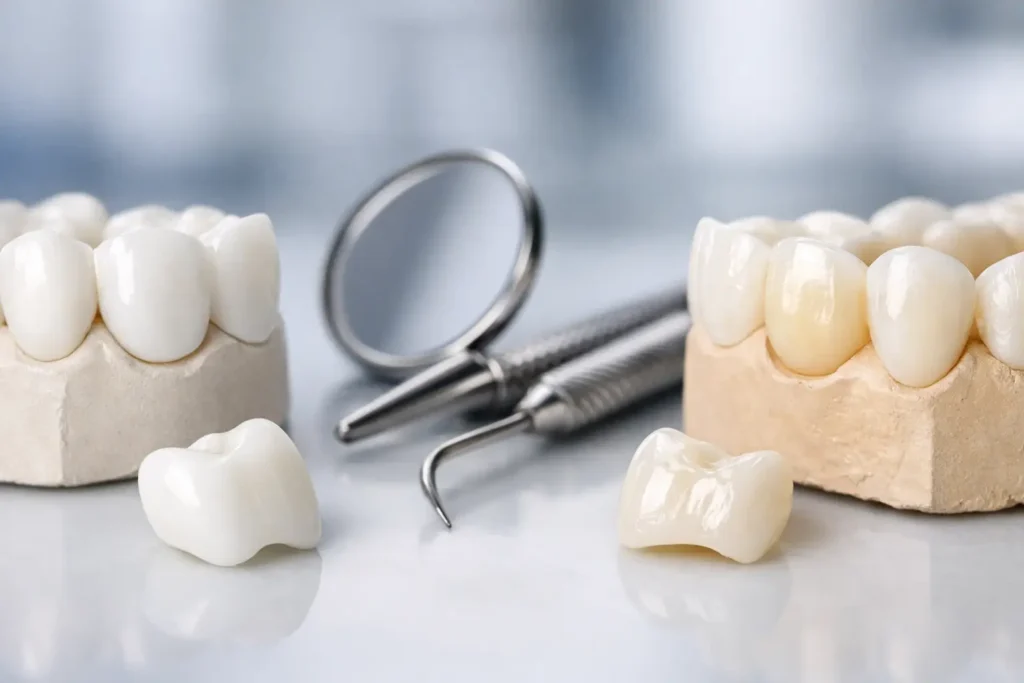
If you have been told you need a crown, the next question usually comes fast: which material makes the most sense for your tooth, your smile, and your budget? When patients compare zirconia crowns vs porcelain crowns, they are usually balancing three things at once – appearance, durability, and long-term value.
That decision matters even more when you are restoring visible front teeth, rebuilding worn molars, or planning several crowns as part of a larger treatment plan. The right choice is not about picking the “best” material in general. It is about choosing the material that fits your bite, cosmetic goals, and how you actually use your teeth every day.
Zirconia crowns vs porcelain crowns: the real difference
At a basic level, zirconia and porcelain are both ceramic-based options used to restore damaged or weakened teeth. Both can look natural, both are widely used in modern dentistry, and both can be excellent choices in the right case. The difference is in how they behave.
Zirconia is known for strength. It is a highly durable material that holds up well under heavy chewing forces, which is why it is often recommended for back teeth and for patients who clench or grind. Porcelain is known for esthetics. It reflects light in a way that can closely mimic natural enamel, which makes it especially attractive for front teeth and highly visible areas.
That sounds simple, but real treatment planning is rarely that tidy. Some zirconia crowns are layered to improve appearance. Some porcelain restorations are strong enough for many everyday situations. What matters most is not the material name alone, but how the crown is designed, where it will be placed, and what your dentist sees in your bite.
When zirconia is usually the better choice
If your crown will go on a molar, strength often moves to the top of the list. Back teeth absorb the highest bite pressure, and they need restorations that can tolerate years of chewing. In these cases, zirconia often has an advantage.
Patients who grind their teeth at night may also be better candidates for zirconia. Heavy grinding can shorten the life of more delicate restorations, especially if the bite is already wearing unevenly. A stronger material may reduce the chance of chipping or fracture over time.
Zirconia can also be a practical option for larger restorative plans. If several teeth need crowns, or if crowns are being combined with implants or other restorative work, durability becomes even more important. In those cases, the goal is not just to make each tooth look good in isolation. It is to build a stable, functional result that performs well as a whole.
The trade-off is that zirconia has traditionally been less lifelike than porcelain, especially in highly visible front teeth. Newer zirconia materials have improved significantly, but if your top priority is the most enamel-like translucency possible, porcelain may still have the edge.
When porcelain is usually the better choice
Porcelain is often chosen for smile-zone teeth because it can produce a very refined, natural appearance. If the crown is going on a front tooth, where light reflection, translucency, and subtle color matching matter most, porcelain is often the material patients and dentists prefer.
This becomes especially important if you are restoring one single visible tooth. Matching one front tooth to the neighboring natural teeth can be one of the most demanding cosmetic tasks in dentistry. Porcelain gives the lab more flexibility to create delicate shading and lifelike character.
Porcelain can also be a strong choice for patients focused on cosmetic dentistry, especially when crowns are part of a broader smile design. If the case involves balancing shape, color, and symmetry across visible teeth, esthetics may justify choosing a material that prioritizes beauty first.
The trade-off is that porcelain may be more vulnerable to chipping in some situations, particularly for patients with a heavy bite or grinding habits. That does not mean porcelain is weak. It means material selection should match function, not just appearance.
Appearance: which looks more natural?
If the question is purely cosmetic, porcelain usually wins. Its translucency tends to look more like natural enamel, especially under direct light. That is why it remains a popular choice for front teeth and for patients who are very detail-focused about smile esthetics.
Zirconia has improved greatly and can look very attractive, particularly in modern high-quality labs using digital design and advanced finishing techniques. For many patients, especially on premolars and back teeth, the difference may be small or not noticeable in daily life.
But for a camera-facing front tooth, small details matter. If your treatment is highly esthetic and the crown will be seen every time you smile, speak, or laugh, porcelain often offers the most refined cosmetic result.
Strength and longevity: which lasts longer?
In many high-force situations, zirconia has the advantage. It is exceptionally strong and often recommended when durability is the top priority. Patients who chew hard foods, grind their teeth, or need crowns on molars often benefit from that added toughness.
Porcelain can also last many years, especially when placed correctly and used in the right part of the mouth. Longevity depends on more than the material. Your bite, oral hygiene, crown fit, gum health, and whether you wear a night guard all play a role.
A well-made crown in the right material tends to last longer than a poorly chosen crown made from a premium material. That is why proper diagnosis matters as much as the material itself.
Tooth preparation and comfort
In some cases, zirconia can allow for a conservative and efficient restoration because of its strength. Porcelain may require different design considerations depending on the case. These details are not usually something patients need to decide on their own, but they are part of why one crown type may be recommended over another.
Comfort should also be part of the conversation. A crown should not only look good on the day it is placed. It should feel natural in your bite, function comfortably, and work well with the surrounding teeth and gums.
That is especially important for patients traveling for dental treatment. You want a plan that reduces the chance of adjustments, remakes, or avoidable complications after you return home.
Cost: is zirconia or porcelain more affordable?
Cost varies by case, clinic, lab process, and whether your treatment involves one crown or a full restorative plan. In many practices, zirconia and porcelain crowns are priced similarly, but there can be differences depending on how the restoration is fabricated and customized.
For patients comparing treatment costs between the US or Canada and Costa Rica, the bigger financial question is often not zirconia vs porcelain alone. It is how to receive specialist-led care, quality materials, and a predictable treatment plan without paying inflated local prices.
That is one reason many international patients look for clinics with an on-site lab, digital dentistry, and multiple specialties under one roof. Those systems can improve efficiency, shorten turnaround time, and help keep treatment organized when several procedures are involved.
How dentists decide between zirconia crowns vs porcelain crowns
A good recommendation starts with your specific case, not a one-size-fits-all sales pitch. Dentists usually look at where the tooth is located, how much bite pressure it handles, whether you grind your teeth, how visible the tooth is when you smile, and how closely the crown needs to match nearby natural teeth.
They also consider the bigger picture. If you need additional work such as implants, veneers, root canal treatment, or multiple crowns, the crown material should support the entire treatment plan. A crown that looks beautiful but does not fit the functional demands of your mouth is not the right choice.
At Colina Dental, that kind of planning matters because many patients are traveling for care and want clear answers before committing to treatment. A specialist-led approach, modern imaging, and a strong lab partnership make it easier to recommend the material that fits both esthetic goals and long-term performance.
Which one is right for you?
If your priority is maximum strength, especially on back teeth, zirconia is often the stronger candidate. If your priority is the most natural-looking result for a visible front tooth, porcelain may be the better fit. If you need both beauty and durability, the answer may depend on the exact tooth, your bite, and how your dentist designs the restoration.
The best crown is not the one with the most impressive label. It is the one chosen carefully, made precisely, and placed as part of a thoughtful plan built around your mouth, your goals, and your long-term comfort.
If you are weighing your options, ask for a recommendation based on function as much as appearance. That conversation usually leads to the right answer faster than comparing materials in the abstract.