



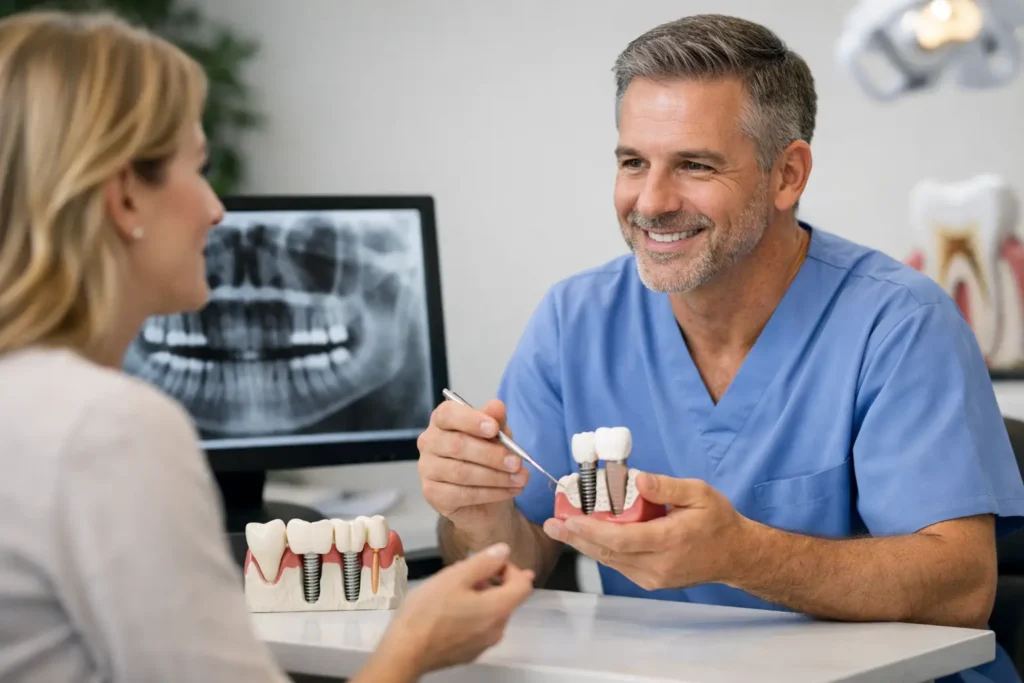
If a dental implant quote looks great but leaves you with more questions than answers, pause there. Implant treatment is not a routine filling. You are making a decision about surgery, long-term function, esthetics, healing time, and in many cases, a meaningful financial investment. The right consultation should make you feel clearer, not more rushed.
For many patients, especially those comparing care in the US with treatment abroad, the difference between a good experience and a stressful one often comes down to the conversation before treatment begins. That is why the best questions to ask implant dentist are not just about price. They are about who is planning your case, what technology is being used, how risks are managed, and what support you will have after the procedure.
Why the right questions matter before implant treatment
Dental implants can be life-changing, but they are not one-size-fits-all. A single implant, multiple implants, and full-arch options like All-on-4 each come with different planning needs, timelines, and costs. Some patients need bone grafting. Others may be better candidates for immediate loading, while some should not rush that step.
A strong implant consultation should cover your oral health, medical history, bone condition, bite, gum health, and cosmetic goals. It should also explain trade-offs. Faster is not always better. Lower cost is not always lower value. A confident clinic will welcome thoughtful questions because informed patients tend to make better decisions.
The best questions to ask implant dentist at your consultation
Who will actually plan and place my implant?
This question tells you a lot. In some clinics, the person you meet first is not the specialist who performs the surgery. That does not automatically mean the care is poor, but you should know exactly who is responsible for diagnosis, surgical placement, restoration, and follow-up.
For more complex cases, such as full-mouth restoration or full-arch implant treatment, a multi-specialty approach can be a real advantage. A prosthodontist, periodontist, and oral surgeon may each play a role. If a clinic has specialists under one roof, treatment is often more coordinated and efficient.
How much experience do you have with cases like mine?
Experience matters, but specificity matters more. A dentist may have placed many implants, yet your case may involve bone loss, prior dental work, missing multiple teeth, or esthetic demands in the front of the mouth. Ask how often they treat cases similar to yours.
You are not looking for a sales pitch. You are looking for confidence backed by pattern recognition. A seasoned implant team should be able to explain what they see in your case, what may complicate it, and how they plan around those issues.
What imaging and technology will be used to evaluate my case?
Implant planning should not rely on guesswork. A 3D CT scan or CBCT is often essential because it shows bone volume, sinus position, nerve pathways, and anatomical limitations that standard X-rays may miss. Digital planning can also improve implant positioning and help coordinate the surgical and restorative phases.
If a clinic offers 3D digital dentistry and an on-site lab, that can streamline treatment and reduce delays. It may also improve communication between the surgical team and the restorative team. That does not mean every case becomes simple, but it often makes the process more precise.
Am I a good candidate for implants right now?
This is one of the most important questions because the honest answer is sometimes, not yet. Gum disease, uncontrolled diabetes, smoking, heavy grinding, low bone density, or certain medications can affect implant success. A trustworthy dentist will tell you whether anything should be addressed before surgery.
If you are told you are a perfect candidate within minutes, without a proper review of scans and health history, that is a red flag. Good implant care starts with careful selection and realistic planning.
Will I need bone grafting, sinus lift, or any preparatory treatment?
Many patients assume implants can be placed immediately, but that depends on bone quality and anatomy. If a tooth has been missing for a while, the bone may have shrunk. In the upper back jaw, sinus space can also be a factor.
Ask not only whether you need preparatory treatment, but why. Also ask what happens if you choose not to do it. In some cases, alternative treatment options may be available. In others, skipping preparation may reduce long-term stability.
What implant system or brand do you use, and why?
This is not about memorizing product names. It is about understanding whether the clinic uses reputable implant systems with a track record, broad restorative compatibility, and accessible replacement parts if needed in the future.
A good answer should sound practical, not flashy. The dentist should explain why they use a certain system and how it supports long-term maintenance. If you live in the US or Canada, it is reasonable to ask whether future restorative components or service will be manageable back home.
Questions about timing, healing, and expectations
How long will my treatment take from start to finish?
Implant timelines vary more than patients expect. Some cases allow extraction and implant placement on the same day. Others require healing periods between extraction, grafting, implant placement, and final restoration. Full-arch treatment can also involve temporary teeth before the final prosthesis.
If you are traveling for treatment, the schedule matters even more. Ask how many visits are required, how long each stay should be, and what might cause delays. A realistic timeline is better than an optimistic one that leaves no room for healing.
Will I have temporary teeth during healing?
This matters for comfort, appearance, and daily life. Many patients need to know whether they will be able to smile confidently, eat socially, or return to work during healing. The answer depends on implant stability, the location of the implant, and the type of restoration planned.
Temporary solutions can work very well, but they also come with limitations. Ask what you can eat, how careful you need to be, and whether the temporary is designed mainly for appearance, light function, or both.
What will recovery feel like, and how much downtime should I expect?
Patients often focus on the procedure and forget to ask about the days after. Recovery varies based on the number of implants placed, whether extractions or grafting are involved, and your personal healing response. Some people return to normal activity quickly. Others need several days of lighter scheduling.
Your dentist should explain expected swelling, soreness, dietary restrictions, medication needs, and warning signs that require attention. Clear recovery guidance is especially important if you are returning home shortly after treatment.
Questions about risk, longevity, and follow-up
What are the main risks in my case?
Every surgical procedure carries risk. Infection, implant failure, nerve issues, sinus complications, bite problems, and esthetic concerns are all possible, though not equally likely. The key is not to expect zero risk. The key is to understand your specific risk profile.
A good implant dentist will not avoid this conversation. They will explain what can go wrong, how uncommon those problems are, and what steps they take to reduce them. Straight answers build trust.
What is your success rate, and how do you define success?
This question helps separate marketing from substance. Some clinics define success as the implant simply integrating with bone. Others include long-term function, healthy gums, patient comfort, and esthetic outcome. Those are not the same thing.
Ask what happens if an implant does not integrate or if a restoration needs adjustment. The best answer is not just a percentage. It is a clear explanation of how outcomes are measured and how problems are handled.
What kind of maintenance will I need after treatment?
Implants are not natural teeth, but they still need professional maintenance and excellent home care. Ask how often you should return for checkups, what kind of cleanings are recommended, and what habits could shorten the life of the implant or prosthesis.
This is especially important for full-arch cases. The prosthesis, bite forces, and hygiene routine may be different from what you are used to. A clinic should prepare you for long-term success, not just the day of delivery.
Questions about cost and dental travel logistics
What exactly is included in the quoted price?
This is one of the smartest questions you can ask. A low initial quote may not include scans, extractions, grafting, temporary teeth, abutments, sedation, lab work, or the final restoration. Ask for a written breakdown so you can compare treatment plans fairly.
For patients considering care outside the US, price transparency is a major trust factor. You should know what is included, what could change the total, and when payment is expected.
If I am traveling, how do you handle coordination, lodging, and follow-up?
Implant treatment is not just clinical when you are flying in from another country. It is also logistical. Ask who helps with scheduling, airport transfers, local transportation, recovery planning, and communication between visits.
This is where an experienced dental tourism clinic stands out. A practice like Colina Dental, which combines specialist-led care with hospitality support and on-site lodging, can make treatment far easier for patients who want predictable planning rather than piecing everything together themselves.
If I have a concern after I return home, what happens next?
This question is often overlooked, but it matters. Ask how post-treatment communication works, whether virtual follow-ups are available, and what the process is if you need adjustments later. Not every issue requires a flight back, but some do need timely guidance.
The best clinics do not disappear once treatment is complete. They stay accessible and provide a clear path for support.
What a strong implant consultation should feel like
You should leave the consultation with a written treatment plan, a realistic timeline, a clear cost explanation, and a genuine sense that your case has been carefully evaluated. You should also feel that your concerns were welcomed, not brushed aside.
If you are comparing providers, listen closely to how they answer. The best questions to ask implant dentist are only useful if the answers are specific, transparent, and tailored to your needs. The right team will make complex treatment feel organized, safe, and understandable.
A great implant result starts long before the procedure. It starts with the moment you ask better questions and choose a clinic that is ready to answer them with confidence and care.