



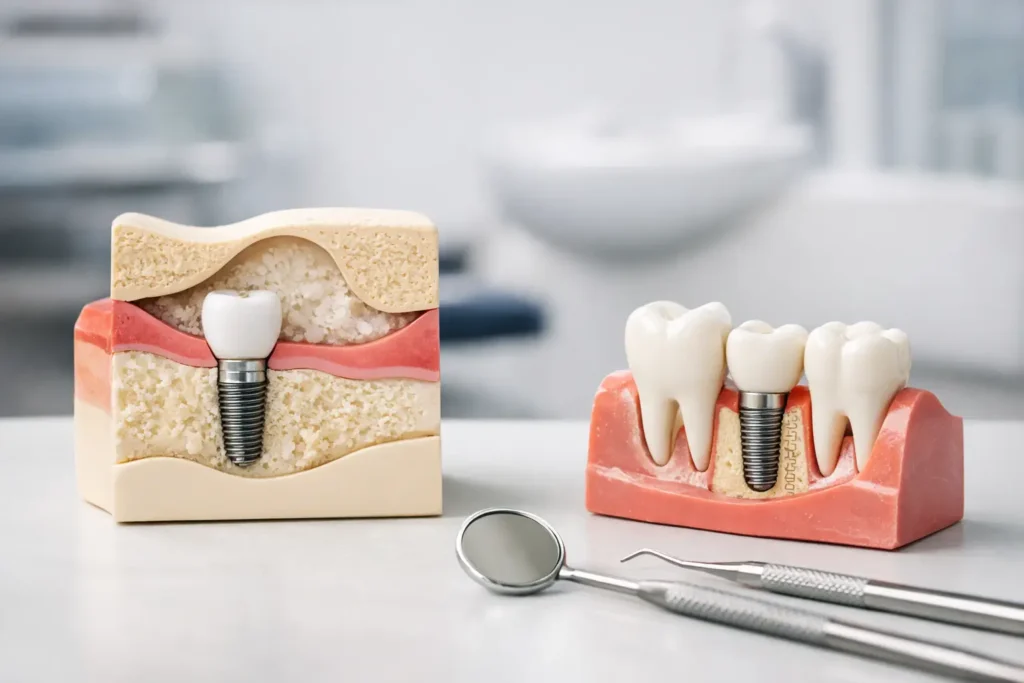
Losing an upper back tooth can create a problem you cannot see in the mirror. The bone in that area often shrinks over time, while the sinus above it can expand downward. By the time you are ready for implants, there may not be enough bone left to hold them securely.
That is where a sinus lift comes in. For many patients, a sinus lift before dental implants is not an extra procedure for the sake of it. It is the step that makes implants possible, stable, and built to last.
If you are considering treatment in Costa Rica, this is one of the details worth understanding early. It affects timing, healing, and whether your implant plan can be completed in one phase or two.
What is a sinus lift before dental implants?
A sinus lift is a bone grafting procedure performed in the upper back jaw, usually where premolars and molars are missing. The goal is to gently raise the sinus membrane and place graft material beneath it, creating more bone height for future implant support.
The term can sound more dramatic than the procedure itself. No one is “lifting your sinuses” in a broad sense. Your surgeon is working in a very specific area of the upper jaw to create enough bone where natural anatomy no longer provides it.
This matters because dental implants need solid bone for stability. In the lower jaw, bone availability is often more straightforward. In the upper posterior jaw, it can be limited by two things at once – bone loss after tooth extraction and the natural size of the maxillary sinus.
Why some patients need a sinus lift before dental implants
Not every implant patient needs this procedure. It depends on your anatomy, how long the tooth has been missing, the quality of your existing bone, and the size and position of the sinus.
After a tooth is removed or lost, the jawbone no longer receives the same stimulation from chewing. The body starts to resorb that bone. In the upper molar area, the sinus can also expand into the empty space. That leaves less vertical bone for an implant.
If there is not enough bone, placing an implant without grafting may increase the risk of poor stability or failure. A sinus lift helps create the foundation first, which is often the safer long-term choice.
Patients are often surprised that this can happen even if they feel fine and have had no sinus symptoms. The need for a sinus lift is usually discovered through imaging, not discomfort.
How your dentist determines whether you need one
This is where proper diagnostics matter. A panoramic image can offer a general view, but a 3D CBCT scan gives the level of detail needed for implant planning. It shows bone height, bone width, sinus position, and nearby anatomy that may affect surgery.
A specialist will evaluate whether there is enough native bone to place an implant immediately, whether a smaller graft is needed at the time of implant placement, or whether a staged sinus lift should be done first.
There is no honest one-size-fits-all answer here. Some patients have enough bone for immediate implant placement with a minor lift. Others need several months of graft healing before implants can be placed safely. The right plan depends on what your scan shows, not on guesswork.
Types of sinus lift procedures
There are two main approaches, and the difference usually comes down to how much bone is already present.
Internal sinus lift
An internal lift, sometimes called a crestal approach, is generally used when only a modest amount of added height is needed. The surgeon accesses the area through the implant site and gently elevates the sinus floor before placing graft material. In some cases, the implant can be placed during the same appointment.
This option can be less invasive, but it is only appropriate when the starting bone height is sufficient for primary implant stability.
Lateral sinus lift
A lateral approach is used when there is more significant bone loss. The surgeon creates a small window in the side of the upper jaw, carefully lifts the sinus membrane, and places bone graft material underneath it. If the remaining bone is too thin for immediate implant stability, implant placement is delayed until the graft matures.
This sounds more involved because it is. But when the anatomy calls for it, it is often the most predictable way to build a strong foundation.
What the procedure feels like
Most patients expect this to be much harder than it is. In reality, the procedure is typically done with local anesthesia, and sedation may be used depending on the case and the patient’s comfort level.
During surgery, you should feel pressure, movement, and time passing, but not sharp pain. Afterward, mild to moderate swelling, congestion, and tenderness are common for a few days. Some bruising can happen, especially with a lateral sinus lift.
One unusual part of recovery is that your instructions may include avoiding forceful sneezing, blowing your nose, drinking through a straw, or anything else that creates pressure in the sinus area. That is because the graft site is healing close to the sinus membrane and needs a stable environment.
Recovery and timing before implants
This is one of the most important planning points for traveling patients. A sinus lift is not always a same-week path to final implants.
If you have enough existing bone, an implant may sometimes be placed at the same visit as a minor sinus lift. If bone is limited, the graft usually needs time to integrate before implant placement. That healing period often ranges from four to nine months, depending on the graft volume, your biology, and the overall treatment plan.
This is why clear sequencing matters. For patients combining treatment with dental tourism, the best experience starts with realistic timing and a specialist-led plan. In complex cases, trying to rush treatment is rarely the best bargain.
Risks and trade-offs to understand
A sinus lift is a well-established procedure, but it is still surgery. The most common intraoperative issue is perforation of the sinus membrane. Small perforations can often be repaired at the time of surgery. Larger ones may require the procedure to be paused and rescheduled after healing.
Other risks include infection, graft failure, bleeding, swelling, and delayed healing. Smokers, patients with uncontrolled diabetes, and those with certain sinus conditions may face a higher risk of complications.
There are also practical trade-offs. A sinus lift can add cost, add healing time, and turn a simpler implant plan into a staged one. But the alternative is not always better. Skipping needed grafting may compromise implant position, stability, or longevity.
A good surgeon will not present this as automatic or avoidable. They will explain whether it is necessary, whether there are alternatives, and what each option means for your outcome.
Can sinus problems prevent implant treatment?
Sometimes, yes. Chronic sinus infections, significant inflammation, nasal obstruction, or untreated sinus disease may need to be addressed before surgery. This does not mean you cannot get implants. It means the area should be evaluated properly first.
That is another reason interdisciplinary planning matters. For a patient investing in travel and restorative treatment, you want imaging, surgical judgment, and prosthetic planning working together from the start.
Why specialist planning matters for dental tourists
When you are traveling for care, convenience matters, but predictability matters more. A sinus lift before dental implants is one of those procedures where experience, imaging, and coordination can save you from expensive surprises later.
The right clinic should be able to tell you early whether your case is likely to be immediate, staged, or more complex than it first appears. That is especially valuable if you are arranging flights, lodging, and time away from work.
At Colina Dental, this kind of treatment planning is approached with the same standard that has guided the clinic since 1979 – specialist-led care, modern diagnostics, and a patient experience built to support people traveling for major dentistry. When surgery, restorative planning, and logistics are handled under one roof, the process becomes clearer and far less stressful.
Questions worth asking before you commit
Before moving forward, ask how much bone you currently have, whether your implant can be placed at the same time as the sinus lift, how long healing will take, what type of graft is recommended, and what your travel timeline should look like. These are not minor details. They shape the whole treatment plan.
You should also ask who will perform the procedure and how your case will be monitored afterward. For advanced implant cases, the difference between a decent plan and an excellent one often comes down to coordination.
A sinus lift can sound like a setback when you first hear about it. In many cases, it is the opposite. It is the step that turns a questionable implant site into a strong one, and that is worth getting right the first time.